A clutter-free kitchen counter can make the whole room feel cleaner, calmer, and easier to use. When appliances, mail, food packages, and cooking tools pile up, even a spacious kitchen can feel crowded. The good news is that you do not need a complete remodel to take back your counter space.
With a few practical storage solutions and simple daily habits, you can create clear surfaces that stay that way. Start by deciding what truly belongs on the counter, then find a convenient home for everything else.
Start With a Quick Reset
Before buying storage containers or organizers, clear everything from your counters. Place each item on a table, floor, or other temporary surface so you can see exactly what you have.
Sort the items into four groups:
– Use every day
– Use occasionally
– Belongs somewhere else
– Can be donated, recycled, or discarded
This process often reveals that counters are holding items simply because they were never put away. You may also find duplicates, broken tools, or appliances you rarely use.
Clean the empty counters before putting anything back. A clean surface gives you a fresh starting point and makes it easier to decide what deserves a permanent place.
Decide What Should Stay Out
Not every item needs to be hidden away. The goal is not to make your kitchen look unused. Instead, keep only the things that support your daily routine.
Items that may deserve a place on the counter include:
– A coffee maker used every morning
– A toaster used several times a week
– A knife block
– A fruit bowl
– A small container for cooking utensils
Try to limit visible items to those you use regularly. If an appliance is used only once or twice a month, store it in a cabinet, pantry, or closet. You can bring it out when needed.
A helpful test is this: if you would not notice the item missing for a week, it probably does not need to live on the counter.
Create a Home for Everything
Counters often become cluttered when items do not have a clear storage location. Give each commonly used item a specific home, and make sure that home is easy to reach.
For example:
– Store cutting boards upright in a narrow rack.
– Keep baking supplies together in a pantry bin.
– Place food storage containers in one cabinet.
– Use a drawer divider for measuring spoons and small tools.
– Keep reusable shopping bags in one basket or cabinet.
– Store cleaning products under the sink or in a nearby utility area.
When storage is convenient, putting things away takes less effort. Avoid placing frequently used items in hard-to-reach locations. A system that looks neat but feels inconvenient will be difficult to maintain.
Make Better Use of Cabinets and Drawers
Many kitchens have unused vertical space inside cabinets. Shelf risers can create an extra level for plates, mugs, cans, or small appliances. A pull-out shelf can make deep cabinets easier to access, while a lid organizer can keep pots and pans under control.
Drawers can also be improved with simple dividers. Use them to separate cooking tools, utensils, wraps, and food storage accessories. Grouping similar items prevents drawers from becoming catch-all spaces.
If you have deep cabinets, place less frequently used items toward the back and everyday items near the front. For small items, use bins that can be pulled out as a group. Labeling is optional, but it can help family members return items to the right place.
Use the Space Behind Cabinet Doors
The inside of a cabinet door offers useful storage without taking up counter space. Depending on the cabinet, you can add:
– A rack for cutting boards or baking sheets
– A holder for measuring cups
– A small basket for spices
– Hooks for pot holders
– A pocket organizer for wraps and bags
Choose slim organizers that allow the door to close properly. Before installing anything, check the available space and make sure the hardware will not interfere with shelves or cabinet contents.
This hidden storage is especially useful for items that are used often but do not need to be visible.
Control Paper and Mail Clutter
Mail, receipts, school papers, and notes can quickly take over a kitchen counter. Create one designated paper station away from food preparation areas.
A small wall organizer, basket, or file holder can work well. Sort papers regularly into categories such as:
– To read
– To respond to
– To file
– To recycle
Set a routine for processing papers once or twice a week. Remove junk mail as soon as it enters the home, and avoid using the counter as a long-term holding place.
If your household shares a calendar or message board, place it in the same area. Keeping information in one location can reduce loose notes and reminders around the kitchen.
Organize Small Appliances
Small appliances are useful, but they can take up a large amount of counter space. Begin by identifying which appliances you use daily, weekly, or rarely.
Keep daily appliances accessible, but store less frequently used items in a cabinet, pantry, or nearby closet. If several appliances share similar functions, consider whether you need all of them.
To make storage easier:
– Keep appliance cords neatly wrapped.
– Store accessories with the appliance.
– Use a sturdy shelf for heavy machines.
– Leave enough space to lift items out safely.
– Avoid stacking appliances that are difficult to move.
If an appliance is too heavy or awkward to put away, it may be worth giving it a permanent location in a corner. The key is to prevent several appliances from spreading across the counter.
Add Simple Countertop Boundaries
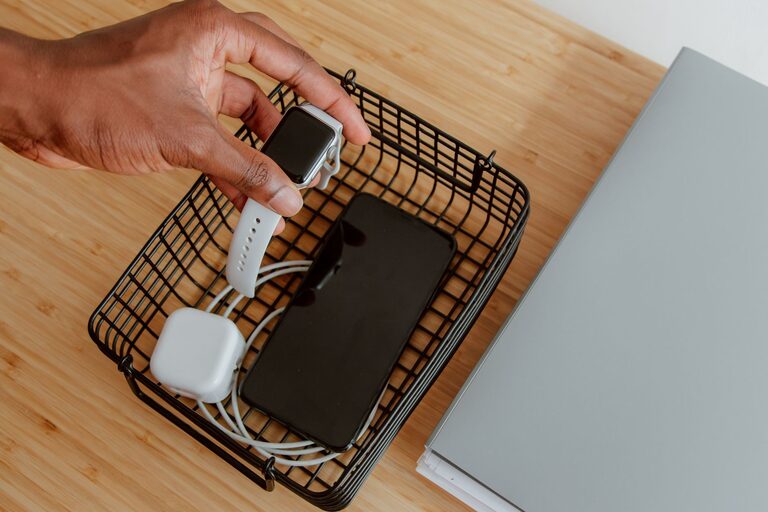
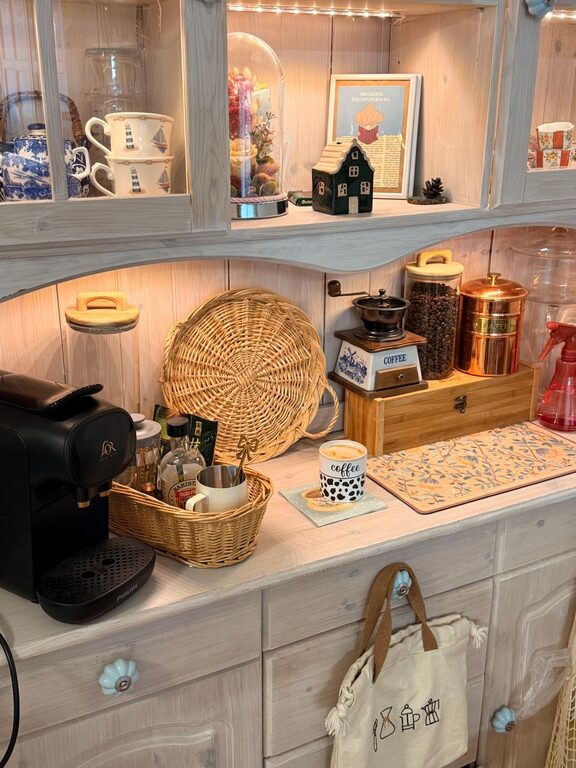
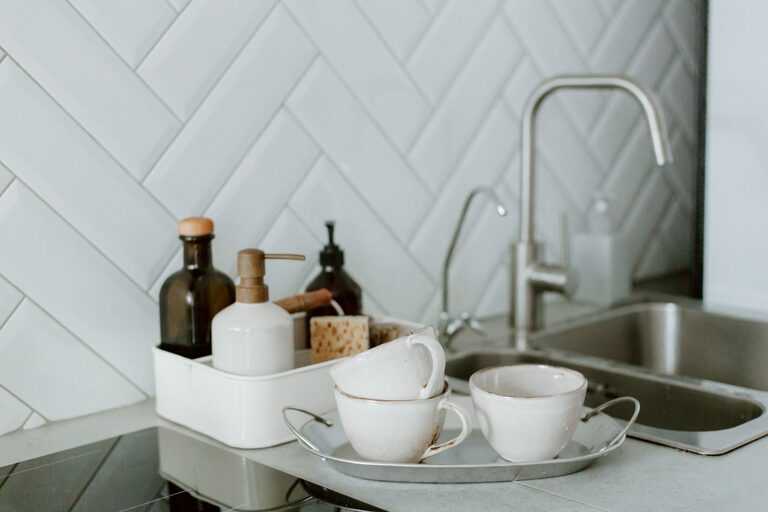
Sometimes a few attractive, contained items can make a counter look organized. A tray can hold cooking oils, salt, and pepper in one place. A small basket can gather coffee supplies. A utensil holder can keep everyday tools from spreading across the work area.
The purpose of a tray or basket is to create a boundary. Instead of several loose objects, you have one organized group that can be moved easily when cleaning.
Choose containers that fit your kitchen and are easy to wipe down. Avoid using too many decorative organizers, since they can add to the visual clutter.
Keep Food From Taking Over
Food packages are a common source of counter clutter. Create a clear system for items such as bread, snacks, produce, and breakfast foods.
A bread box or basket can keep loaves contained. A fruit bowl can hold produce that should be eaten soon, while less delicate items can stay in the pantry. Use clear bins to group snacks or breakfast supplies, but avoid overcrowding them.
When groceries come home, put them away promptly. Leaving bags and packages on the counter makes it easier for clutter to build throughout the day.
Build a Five-Minute Closing Routine
The easiest way to maintain clear counters is to reset the kitchen every evening. A short routine can include:
- Put away food and appliances.
- Return cooking tools to their storage locations.
- Load or wash dishes.
- Recycle papers and packaging.
- Wipe the counters.
- Sweep visible crumbs from the floor.
Set a timer for five or ten minutes if needed. The goal is consistency, not perfection. A small daily reset prevents a larger cleaning project later.
Make the System Easy to Maintain
A clutter-free counter depends more on habits than on storage products. Make the system simple enough for everyone in the household to follow.
Review the counters every few weeks. If an item keeps returning to the same spot, consider whether it needs a better home. If a cabinet is difficult to use, adjust the arrangement rather than allowing items to collect outside it.
Leave some open counter space for food preparation. Clear areas make cooking more comfortable and give the kitchen a cleaner appearance. With intentional storage and a quick daily reset, your counters can stay functional, welcoming, and clutter-free.